Cavity Back vs Blade Irons for Beginners
Posted by Bridget Houlihan on Jul 14, 2026
Main image courtesy of LiveAbout.
Walking into a golf shop for the first time, it's easy to let aesthetics make the decision. The sleek, thin blades in the display case look the way irons are supposed to look — they're what tour pros carry, and they photograph beautifully. So beginners assume that if the best players in the world use them, they must simply be the best irons.
That assumption is one of the most common and costly mistakes a new golfer can make.
Blade irons were engineered for golfers who already have a consistent, repeatable swing. They reward precision and punish everything else. For a beginner still figuring out the fundamentals, blades don't just fail to help — they work against you.
Cavity back irons were designed with imperfect swings in mind. They forgive mishits, launch the ball higher, and give beginners the one thing that matters most early on: consistent enough results to stay motivated and keep improving.
We’re going to delve a little deeper into the differences between these two, as well as:
- How blades may actually hurt a beginner’s game
- Why cavity backs might be the better choice
- Where to find cavity backs perfect for beginners (at great prices)
Cavity Back vs Blade Irons
Get to know a little more about these types of irons
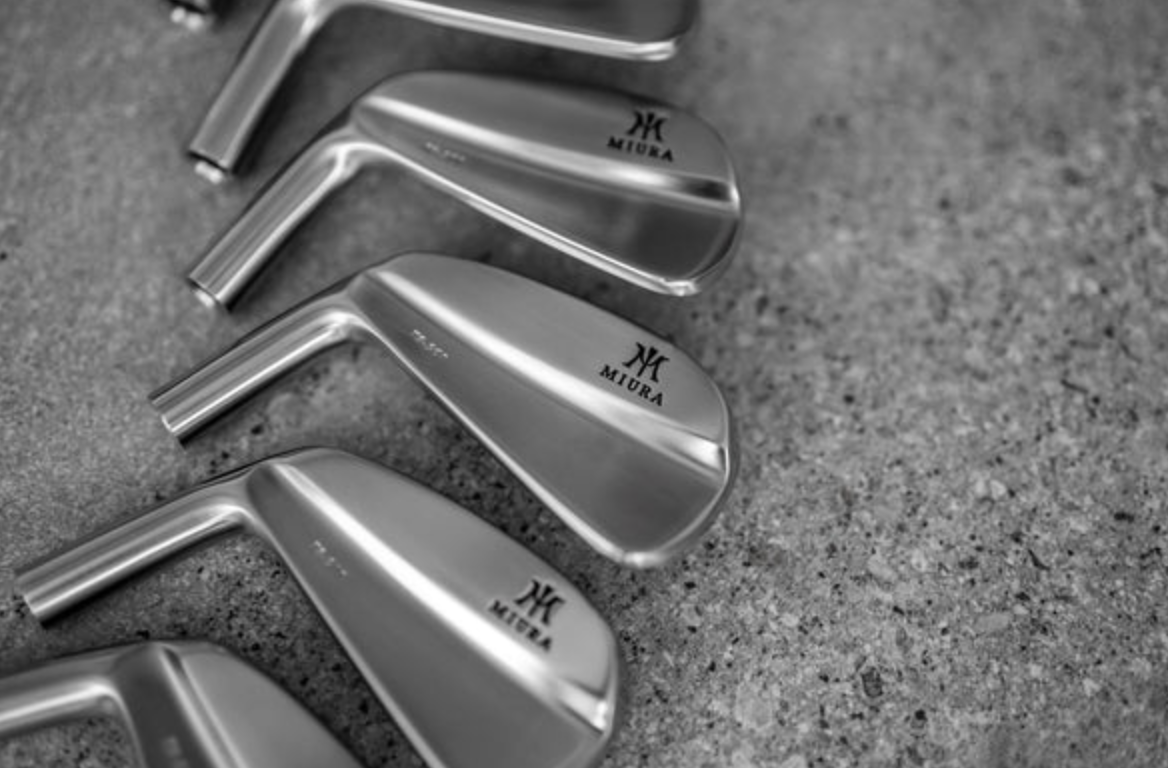
If you’re a more experienced player, you might want to consider checking out blade irons vs. cavity backs. Image courtesy of Miura Golf.
What Are Blade Irons?
Blade irons — sometimes called muscle backs — are the oldest and most traditional iron design in golf. If you picture a classic iron in your head, you're almost certainly picturing a blade. Thin topline, compact head, flat back, minimal offset. They're understated, precise-looking, and have barely changed in silhouette over the past several decades.
The design is simple by intention. The weight in a blade is concentrated in a narrow band directly behind the center of the face. There's no perimeter weighting, no engineered forgiveness, no technology working in the background to correct your mistakes. What you put into the shot is exactly what you get out of it — for better or worse.
That's precisely why the best players in the world love them. For a low-handicap golfer with a grooved, repeatable swing, blades offer something cavity backs can't match: complete control. A skilled player can shape shots left or right, flight the ball low into the wind, or land it soft on a tight pin — all by feel alone. The direct connection between swing and result is the whole point.
But that's also the trap beginners fall into. Watching a scratch golfer work a blade through a tight gap makes the club look like the reason. It isn't. The club is simply responding to a swing that took years to build.
In the hands of a beginner, that same responsiveness becomes a liability. Every slight mishit — a strike half an inch toward the heel, a fraction off the toe — is transmitted directly into the result with no buffering, no correction, no help. The blade does exactly what your swing tells it to do. And for most beginners, that's not a feature, it's an issue.
What Are Cavity Back Irons?
Cavity back irons are exactly what the name suggests — the back of the clubhead has a hollowed-out cavity, redistributing the weight away from the center and around the perimeter of the club. That single design change, which became mainstream in the 1970s and 1980s, fundamentally transformed recreational golf.
The engineering principle behind them is called perimeter weighting. By moving mass to the outer edges of the clubhead, designers lower the center of gravity and increase what's known as moment of inertia — or MOI. In plain terms, MOI measures how much the clubface resists twisting at impact. A higher MOI means that when you strike the ball toward the heel or toe instead of the sweet spot, the face stays more square, the ball flies straighter, and you lose far less distance than you would with a blade. The mishit is forgiven rather than punished.
The result is a significantly larger effective hitting area. You don't have to find the exact center of the face to produce a decent shot. That margin for error is everything for a golfer who is still developing consistency.
Cavity backs also tend to have a wider sole and a lower, deeper center of gravity, which makes it easier to get the ball airborne — a struggle almost every beginner knows well. The club does more of the work so your swing doesn't have to be perfect to produce a playable result.
They come in a spectrum of varieties. Game-improvement irons offer a balance of forgiveness and playability. Super game-improvement irons maximize forgiveness at the expense of some shot-shaping control. Players cavity backs sit closer to the blade end, offering cleaner looks with modest forgiveness built in.
For beginners, the choice almost always lives at the game-improvement end — and for good reason.
The Difference That Matters Most for Beginners: Forgiveness
You'll hear a lot of technical language when comparing cavity backs and blades — MOI, CG, perimeter weighting, launch angle. But for a beginner, all of it comes down to one word: forgiveness.
Forgiveness is what happens when you don't hit the ball perfectly — which, as a beginner, is most of the time. It's the difference between a mishit that flies reasonably straight and lands in play, and a mishit that shoots low off the heel, bleeds hard to the right, and finds the nearest hazard. Same swing. Completely different outcome depending on which iron is in your hands.
The technical reason cavity backs are more forgiving comes back to MOI. When a blade twists on a heel or toe strike, energy is lost and the face angle changes at impact — producing weak, offline shots. A cavity back resists that twist, keeps the face more stable, and transfers more energy to the ball even on imperfect contact.
Think of it this way: a blade is a butter knife, precise and unforgiving of any angle that isn't exactly right. A cavity back is a wider, weighted tool that still does the job cleanly even when your technique isn't perfect. For a beginner, forgiveness isn't a luxury. It's the single most important feature your irons can have — because it's what turns a developing swing into a playable round of golf.
Cavity Backs vs Blade Irons for Beginners — What You Need to Know
If you’re a beginner, it might be best to stick with cavity backs, but why?
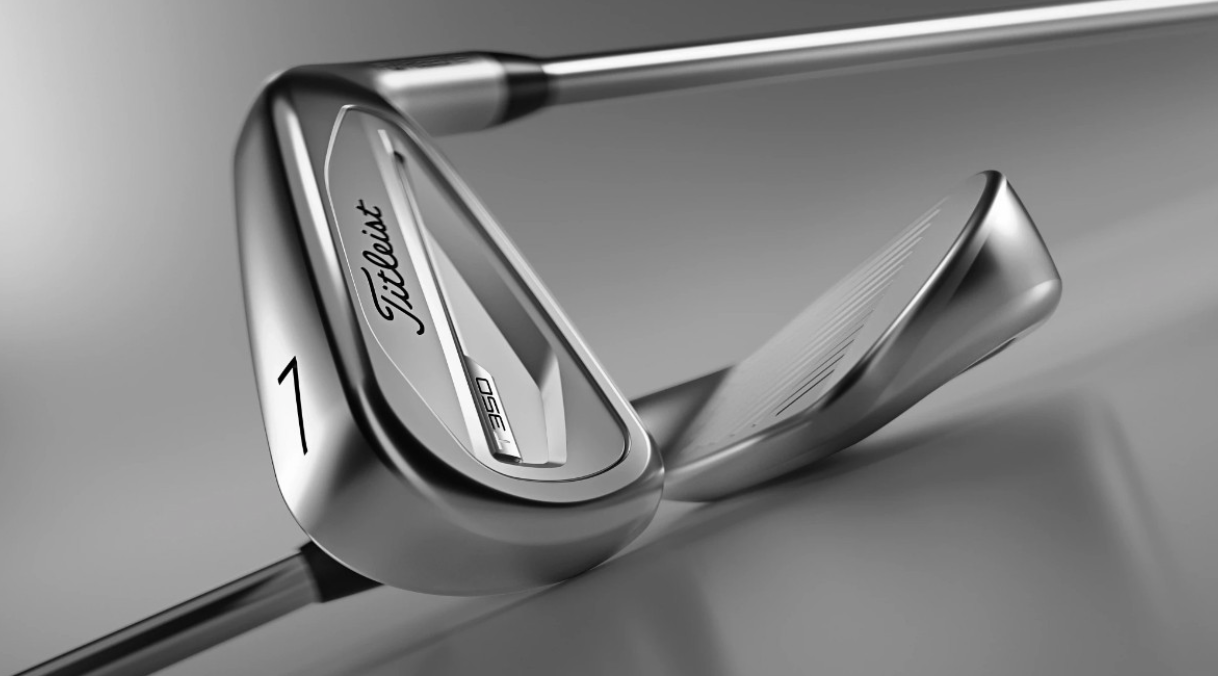
If you’re serious about improving your game as a beginner, the best way to do so might be with cavity back irons. Image courtesy of Titleist.
How Blades Can Hurt a Beginner's Game
It's one thing to say blades are "harder to hit." It's another to understand the full chain of consequences that follows when a beginner puts them in the bag. The damage goes deeper than a few wayward shots.
Mishits Are Severely Punished
With a blade, off-center contact isn't just slightly worse — it's dramatically worse. A strike toward the heel produces a weak shot that bleeds right. A toe strike balloons offline with almost no energy transfer. Thin contact stays low and hot, running through the back of the green. For a beginner who is still developing the muscle memory to find the center of the face consistently, this means the majority of shots are being punished at the maximum possible level. Every round becomes a grind.
Confidence Takes a Hit
Golf is already a mentally demanding game for beginners. Add equipment that magnifies every mistake and it becomes discouraging fast. When shot after shot flies low, weak, or sideways despite genuine effort and improvement in your swing, it's nearly impossible to feel like you're making progress. Many beginners draw the wrong conclusion — that they're simply bad at golf — when the real culprit is the club in their hands.
Bad Habits Form
This is perhaps the most damaging long-term consequence. When a beginner's swing produces consistently poor results with blades, the brain and body start making unconscious compensations. A player might start flipping their wrists through impact to try to get the ball airborne. They might hang back on their rear foot to help the ball up. They might grip tighter under pressure. None of these adjustments are conscious decisions — they're survival mechanisms the body develops in response to repeated failure. And once these habits are grooved, they're extremely difficult to undo.
Swing Development Slows Down
Learning to swing a golf club requires feedback — the ability to make a change, see the result, and adjust accordingly. Blades contaminate that feedback loop. When a slightly improved swing still produces a poor shot because the strike was a quarter inch off center, the improvement goes unrewarded and unrecognized. Progress stalls not because the golfer isn't improving, but because the equipment isn't reflecting that improvement accurately.
The Enjoyment Factor
None of this exists in a vacuum. Golf is supposed to be fun — especially in the beginning, when the whole point is to fall in love with the game. Blades make the early stages of that journey harder, more frustrating, and less rewarding than they need to be. And a beginner who stops enjoying golf doesn't stick with golf. The wrong irons, chosen for the wrong reasons, have ended more than a few promising relationships with the game before they ever had a chance to develop.
How Cavity Backs Help a Beginner's Game
If blades create a chain of consequences that work against a beginner, cavity backs create the opposite effect — a reinforcing cycle where better results lead to more confidence, more confidence leads to better swings, and better swings lead to faster improvement. The right equipment doesn't just make the game easier, it actively accelerates development.
Forgiveness Turns Mishits Into Playable Shots
The most immediate benefit is the one you feel on the very first range session. With cavity backs, a strike that catches the heel or toe still produces a shot that flies reasonably straight, reaches an acceptable distance, and lands somewhere useful. It's not a perfect shot — but it's a playable one. For a beginner, the difference between a playable mishit and a punished one is the difference between a manageable hole and a blow-up. Over eighteen holes, that adds up enormously.
Getting the Ball Airborne Is Easier
One of the most common frustrations for beginners is simply getting the ball off the ground consistently. Blades offer little help here — their higher center of gravity demands a precise, descending strike to launch the ball properly. Cavity backs, with their lower and deeper center of gravity, do much of that work automatically. The club is engineered to get the ball up, which means beginners spend less time topping shots and more time actually playing golf.
The Feedback Loop Works in Your Favor
When you make a genuine improvement to your swing with cavity backs in your hands, you see it. The shot flies better, lands closer, behaves the way you intended. That direct connection between cause and effect is how real learning happens. Every positive result reinforces the swing change that produced it, building muscle memory faster and more reliably than any amount of range work with unforgiving equipment ever could.
Confidence Compounds Over Time
Confidence in golf is not a soft, secondary concern — it is a performance variable. Beginners who see better results more often swing more freely, commit more fully, and recover from bad shots more quickly. Cavity backs create the conditions for that confidence to develop naturally. Instead of dreading iron shots, beginners start trusting them. That mental shift changes everything about how a round of golf feels and how quickly a player improves.
You Can Focus on Your Swing, Not Your Equipment
Perhaps the most underrated benefit is mental bandwidth. When a beginner isn't fighting their clubs — when they're not compensating for equipment that punishes every imperfection — they can direct their full attention to the actual mechanics of the swing. Grip, posture, takeaway, weight transfer — these are the things that matter at the beginner stage. Cavity backs get out of the way and let you focus on them.
What’s the Best Place to Pick Up Both Cavity Backs and Blade Irons?
When you’re ready to expand the clubs in your bag, head to Stickhawk
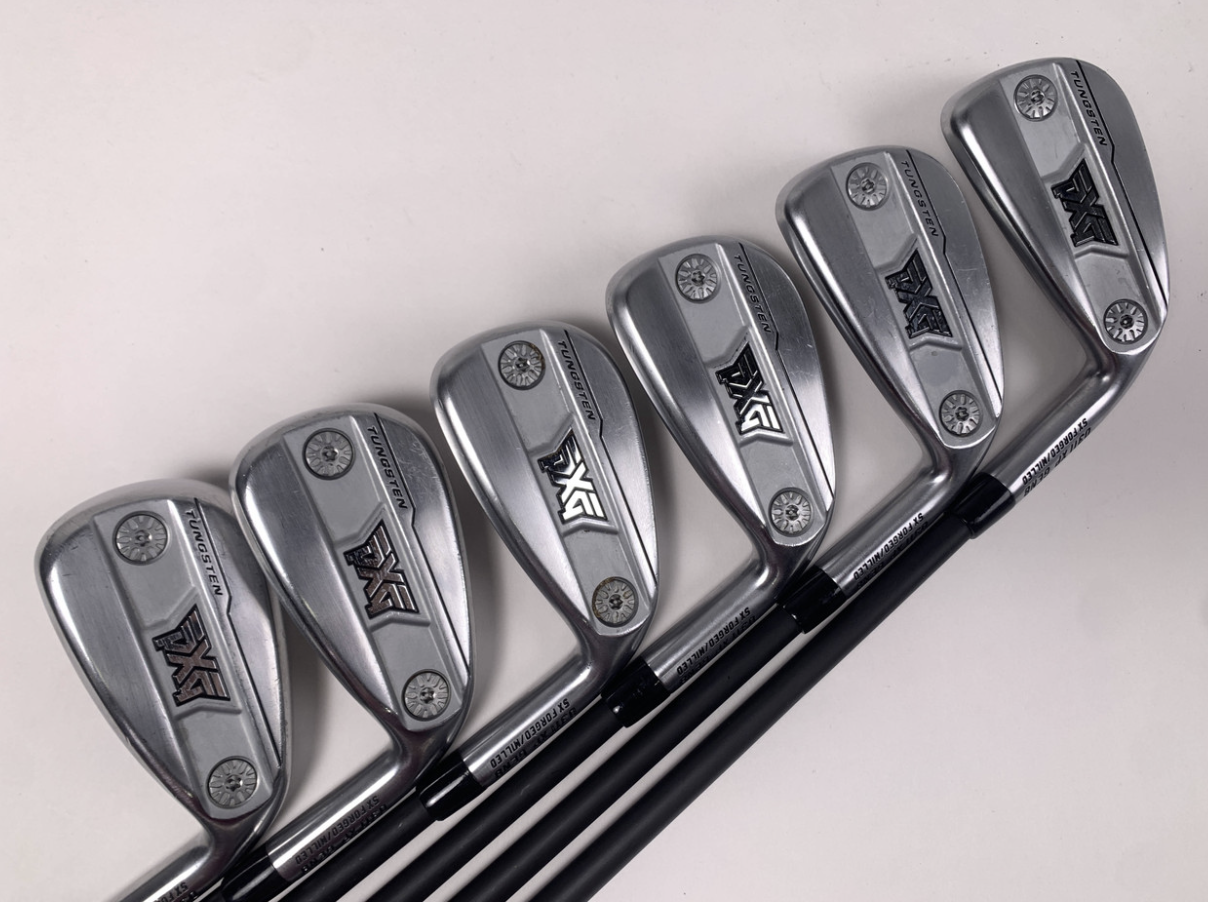
Don't buy irons based on how they look in the display case or what your favorite tour pro carries. Buy the irons that give your game the best chance to grow. Image courtesy of Stickhawk.
When you’re ready to get the right beginner clubs for you, head over and check out what Stickhawk has to offer. We have all kinds of used clubs in wonderful condition, and at some unbeatable prices to boot. Not to mention you can always check out our Deals of the Day featuring items marked down at an additional 30%!
Blades are remarkable tools in the right hands. But those hands belong to golfers who have spent years building a consistent, repeatable swing. Put them in a beginner's bag and they don't just underperform — they slow development, build bad habits, and drain the enjoyment out of a game that should still be exciting. Remember, start with cavity backs, then let your handicap tell you when — and whether — it's time to reconsider.


![What Loft Driver Should I Use? [According to Swing Speed & Skill Level]](https://cdn11.bigcommerce.com/s-ghnp192043/images/stencil/{:size}/uploaded_images/screenshot-2026-07-14-at-6.06.18-pm.png)


:max_bytes(150000):strip_icc()/titleist-cavity-muscle-58af5cbf3df78cdcd886c100.jpg)
